
Thailand
Bangkok
Plan your Bangkok trip: the best areas to stay, where to eat, nightlife, must-see temples and easy ways to get around by train and river boat.
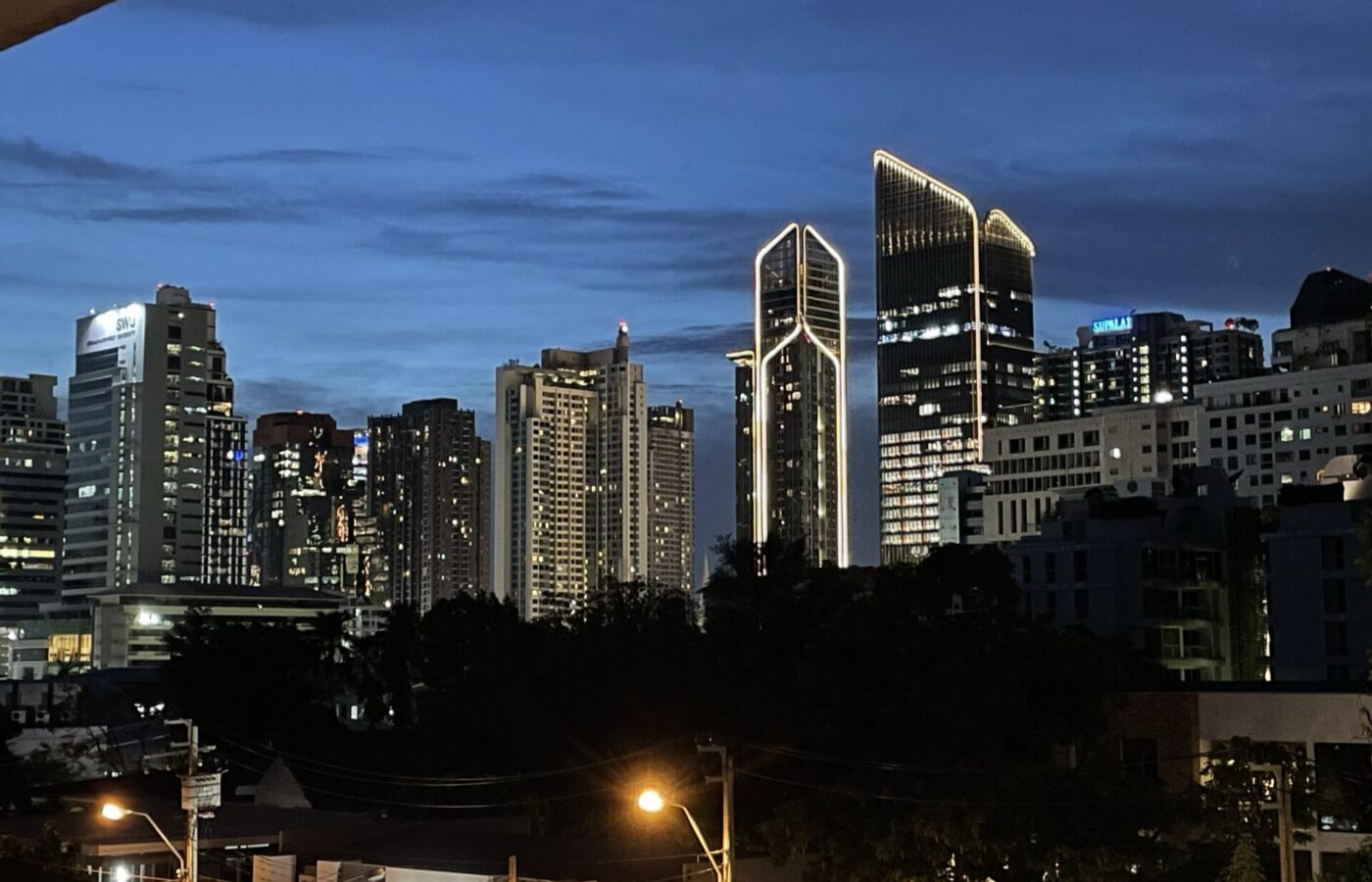
Bangkok overwhelms at first, then wins you over. The Thai capital mixes gilded temples, busy markets, glass towers and backstreets where you can eat very well for little money. The pace is intense, and so is the heat. Still, the city is easy to explore thanks to the elevated BTS Skytrain, the MRT metro and the boats on the Chao Phraya River.
You’ll find major historic sites such as the Grand Palace and Wat Pho, alongside lively neighbourhood life. In the evening, rooftop bars, Chinatown’s street scene and restaurants serving every cuisine take over.
The best time to visit is November to February, when it’s drier and a little cooler. Allow three to four days to see the highlights without rushing. An extra day gives you time to wander, rest in the shade and try street food.
Where to stay in Bangkok
Siam and Pathum Wan
Best for Ideal for a first visit, with shopping malls and transport close at hand.
Why stay here The BTS Skytrain runs right through the heart of the area, so you can reach the rest of the city easily. Restaurants are plentiful.
Good to know The atmosphere is very urban, with big crowds and heavy traffic, and little traditional charm.
Sukhumvit
Best for Best for those who want a wide choice of hotels, restaurants and bars, with good transport links.
Why stay here It’s a large, practical district served well by the BTS Skytrain. You’ll find options for every budget.
Good to know It’s spread out and noisy, and some streets get very busy in the evening.
Silom and Sathon
Best for For travellers who enjoy a lively business district close to the river and good restaurants.
Why stay here There’s a wide choice of hotels and varied restaurants, with easy access to the MRT, the BTS Skytrain and river boats.
Good to know The area is quieter at weekends, and some streets stay lively late into the night.
Old City (Rattanakosin and Banglamphu)
Best for Ideal if you want to sleep near the great temples and the Grand Palace.
Why stay here You can walk to several historic sites and enjoy a more local, down-to-earth atmosphere.
Good to know There’s no BTS Skytrain station in the area, so you’ll rely on taxis, boats or walking.
Chinatown (Yaowarat)
Best for For food lovers and curious travellers who like neighbourhoods that stay busy late.
Why stay here Street food stalls, markets and temples are all close by, and street life almost never stops.
Good to know The streets are narrow, noisy and often congested, and there are fewer hotels offering good comfort.
Where to eat in Bangkok
Local dishes to try
- Pad thai : Stir-fried rice noodles with egg, peanuts and lime, sold everywhere from street stalls to restaurants.
- Tom yum goong : A prawn soup flavoured with lemongrass, lime and chilli, both sour and spicy.
- Som tam : A green papaya salad pounded with chilli, lime and peanuts. You choose the spice level when you order.
- Kuay teow (noodle soup) : A bowl of noodles in a fragrant broth, with meat or meatballs, ideal for a quick and cheap lunch.
- Mango sticky rice : A simple dessert of warm glutinous rice, coconut milk and ripe mango, much loved in the hot season.
- Green curry : A dish simmered in coconut milk with Thai basil and green chilli, served with rice.
Where to eat, by neighbourhood
| Place | Neighbourhood | Cuisine | In short |
|---|---|---|---|
| Tasca Sabio | Bang Rak (Surawong Road) | Spanish, tapas | A tapas stop when you fancy a different kind of food, in a well-connected area. |
| The Ninth Cafe | Lang Suan | Italian and Thai | A café-restaurant with a mixed menu, handy when everyone wants something different. |
| Le Normandie | Bang Rak (Oriental Avenue) | French | A French table by the river, for a dressier evening or a special occasion. |
Places: © OpenStreetMap contributors.
Nightlife
Chinatown, Odeon area
After eating along the streets of Yaowarat, you can end the evening in bars tucked between shop signs and food stalls. The vibe stays relaxed.
- Tep bar
- 八號
Pathum Wan and Ratchadamri
A central area with a more refined feel, home to cocktail, cigar and champagne bars. Convenient if you’re staying near Siam.
- Balcony Lounge and Humidor Cigar Bar
- The Champagne Bar
- The Loft
- T LOFT
Silom and Surawong
A district that comes alive in the evening and is well served by the BTS Skytrain and MRT. The streets around Silom and Surawong are the liveliest.
- Chit Hole Surawong
Riverside, Asiatique side
Asiatique is a large riverside promenade with shops and restaurants. It’s better suited to a relaxed evening than to partying all night.
- Chit Hole Asiatique
Things to do in Bangkok
The Grand Palace and Wat Phra Kaew
The former royal residence houses ceremonial halls and the Temple of the Emerald Buddha. It’s the city’s most famous sight.
Tip Arrive early in the morning to beat the crowds and the heat. Cover your shoulders and knees.
Wat Pho
This large temple is home to an enormous reclining Buddha and numerous courtyards decorated with colourful chedis.
Tip Combine it with the Grand Palace in the same morning, as the two sites are close together. Wear shoes that are easy to take off.
Wat Arun
The Temple of Dawn stands on the west bank of the Chao Phraya. Its central spire can be spotted from far away.
Tip Cross the river by boat from the east bank. The site is lovely late in the day, when the light is softer.
Jim Thompson House
This traditional teak house displays Asian art collections in a peaceful garden, right in the centre. It’s a calm break.
Tip It takes a fairly short time to visit. Fit it in before or after your time in the Siam shopping malls.
Chatuchak Weekend Market
A huge market selling clothes, home décor, plants and food. It’s easy to get lost here, and that’s part of the fun.
Tip Go at the weekend, when the activity peaks, and leave early to avoid the heat. Keep your belongings in front of you.
Golden Mount
A temple set on an artificial hill, reached by a spiral staircase. It offers wide views over the rooftops of the Old City.
Tip Climb in the late afternoon to enjoy the view without the worst of the heat. Wear good shoes.
Chinatown (Yaowarat)
This neighbourhood mixes temples, shops, markets and food stalls. It’s especially lively in the evening.
Tip Come hungry in the late afternoon and sample several small dishes rather than one big meal.
Benjakitti Park
A park with a large lake, walking paths and plenty of greenery. It offers a genuine escape from the noise.
Tip Go early in the morning or late in the afternoon, when the heat is more bearable.
Getting around
From the airport to the city centre
The main airport, Suvarnabhumi, connects to the city by a dedicated rail line (Airport Rail Link), which takes you to Phaya Thai, where you can change to the BTS Skytrain. Metered taxis and app-booked cars are the other option, especially if you have a lot of luggage. Avoid drivers who approach you in the arrivals hall. At Don Mueang, the second airport, use official taxis or the shuttles and buses signposted on site.
Around the city
The BTS Skytrain and the MRT metro are the easiest way to avoid the frequent traffic jams. The express boat on the Chao Phraya is ideal for reaching the Old City and its temples. Metered taxis and car-booking apps are handy in the evening. For a tuk-tuk, agree the fare before you get in. On foot, expect heat and sometimes uneven pavements.
Find a flight
Compare flights and flight + train or bus combinations to Bangkok.
Compare flightsPractical info
Safety
Bangkok is generally a city where you can get around without worry, with the usual precautions for a large capital. Keep your belongings close in crowded places such as markets and on public transport. Be wary of people who approach you to say a site is closed and suggest another visit instead: opening hours are posted at the entrance of each site.
Good to know
- In temples and at the Grand Palace, wear clothing that covers your shoulders and knees, and remove your shoes where indicated.
- Drink water regularly, protect yourself from the sun and plan outdoor visits for the morning or late afternoon.
- Use metered taxis or booking apps, and turn down fixed-price ride offers that are very high.
- Show respect for the royal family and images of the King: they are deeply revered, and disrespectful remarks are poorly received.
Mobile data on arrival
An eSIM to get online as soon as you land, no SIM swap needed.
See data plansFAQ
How many days do you need in Bangkok?
Three to four days is enough to see the major temples, a market, a food-focused neighbourhood like Chinatown and time to eat well. With one extra day, you can slow the pace, visit a museum or park and rest during the hottest hours.
Where should first-time visitors stay in Bangkok?
Siam and Sukhumvit are the simplest choices: they’re well served by the BTS Skytrain and offer plenty of restaurants. Silom also works well if you like being close to the river. If you’d rather walk to the temples, the Old City is more atmospheric but less convenient for transport.
When is the best time to visit Bangkok?
From November to February, the weather is drier and a little cooler, which makes sightseeing more comfortable. From March to May, the heat is intense. From May to October, the rainy season brings showers, often in the late afternoon. Travelling during this period is possible with some flexibility.
How do I get from the airport to central Bangkok?
From Suvarnabhumi, the Airport Rail Link runs to the centre and connects to the BTS Skytrain. Metered taxis and app-booked cars are another option, particularly if you have a lot of luggage. Always choose an official taxi or an app, and turn down offers from drivers who approach you.
Is Bangkok safe for travellers?
Yes, overall, with the usual precautions for a large capital. Watch your belongings in crowded markets and on packed transport. Be wary of people who tell you a site is closed and try to steer you elsewhere. Use metered taxis or apps, and stay alert when crossing the road, as traffic is heavy.
What is a realistic daily budget for Bangkok?
Plan on about 50 to 90 € per person per day, excluding flights, with mid-range accommodation. This covers your hotel, meals, local transport and a few sights. It can be lower if you eat mostly from street stalls, or higher if you dine at upscale restaurants and rooftop bars often.