
South Korea
Seoul
Planning a trip to Seoul? Find the best areas to stay, Korean dishes to try, bars, palaces to visit and tips for getting around the city easily.
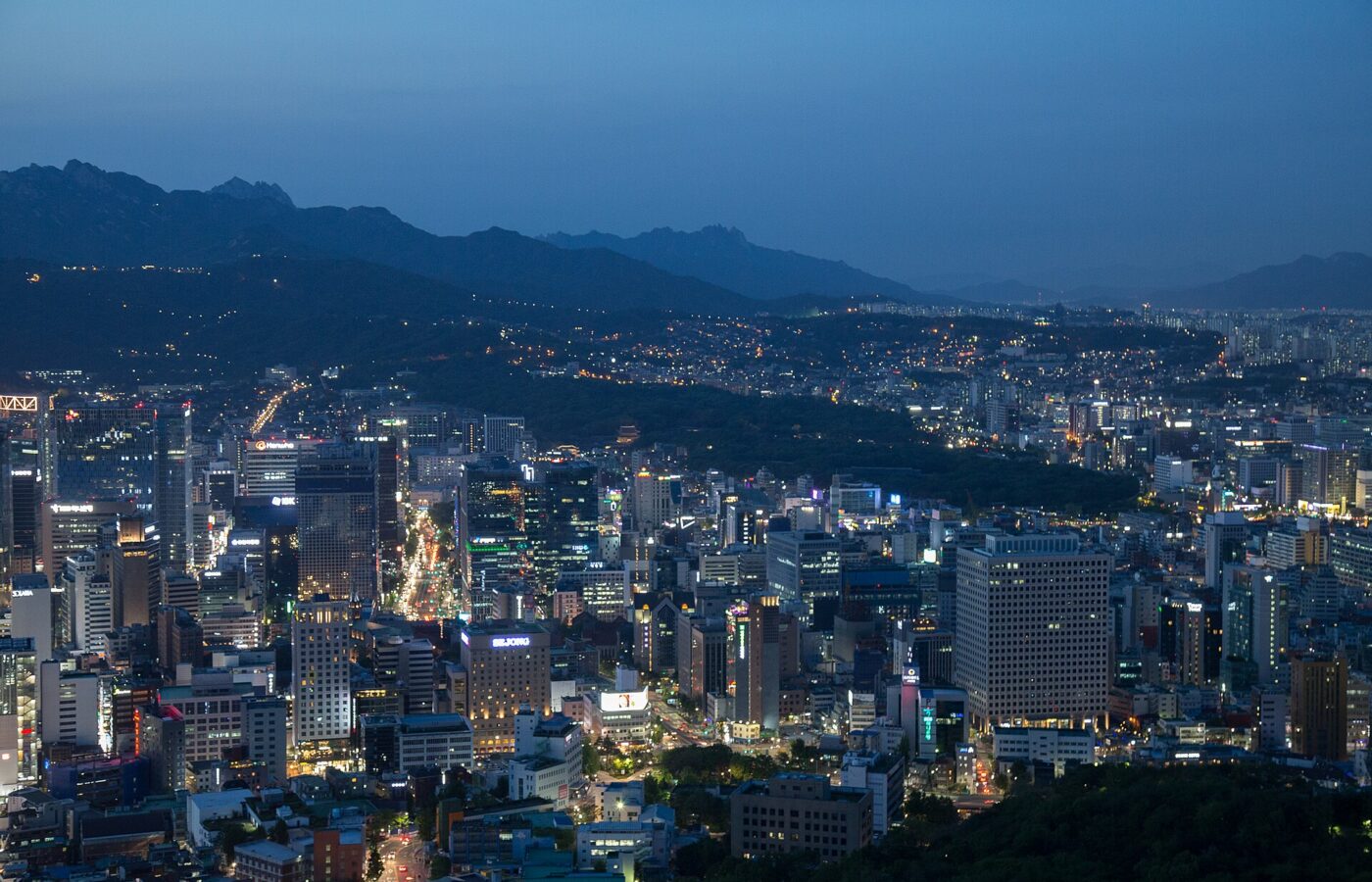
Seoul brings together ancient palaces, alleys of traditional houses and very modern neighbourhoods. In a single day you can visit a palace in the morning, eat Korean barbecue for lunch and end the evening in a craft beer bar.
The city is huge, but the metro makes it easy to get around. Food is varied and often affordable. There are plenty of museums, especially around Jongno and Yongsan.
The best times to go are spring (April to May) and autumn (September to October), when temperatures are mild and the sky is often clear. Summer is hot and humid, and winter is cold and dry.
Allow 4 to 5 days for a first visit. Three days will cover the highlights, but you won’t have much time to wander.
Where to stay in Seoul
Myeongdong (Jung-gu)
Best for Ideal for a first visit, especially if you want to get everywhere on foot or by metro.
Why stay here The area is central and well connected. It has plenty of shops and restaurants, and several sights are within walking distance.
Good to know The streets are crowded both day and night, and the atmosphere is very much about shopping.
Hongdae and Yeonnam-dong (Mapo-gu)
Best for Perfect for travellers who love lively nights out and cafés.
Why stay here There are many restaurants, bars and boutiques. The vibe is young, and things stay busy late into the night.
Good to know It can get noisy at weekends, and it is further from the palaces.
Jongno, Insadong and Ikseon-dong (Jongno-gu)
Best for Best for those who want to stay close to the palaces and traditional alleys.
Why stay here Palaces, museums and traditional houses are all within walking distance. The area has a good mix of cafés and restaurants.
Good to know Some streets go quiet early in the evening. Accommodation here tends to be smaller.
Gangnam (Gangnam-gu)
Best for Suited to business travellers or anyone who prefers a modern setting.
Why stay here The district is spacious, with large hotels and many restaurants. Bongeunsa Temple is located in the district.
Good to know The historic centre is a fair metro ride away. The atmosphere is less traditional.
Where to eat in Seoul
Local dishes to try
- Korean barbecue (samgyeopsal, bulgogi) : The meat is grilled at your table, then wrapped in a lettuce leaf with side dishes.
- Bibimbap : A bowl of rice topped with vegetables, meat or egg, which you mix with a spicy sauce.
- Kimchi jjigae : A spicy stew made with kimchi, served bubbling hot with rice.
- Tteokbokki : Rice cake sticks in a spicy red sauce, a very common street food.
- Naengmyeon : Cold noodles served in broth, a good choice when the weather is hot.
- Gamjatang : A hearty pork bone stew with potatoes and vegetables, served piping hot.
Where to eat, by neighbourhood
| Place | Neighbourhood | Cuisine | In short |
|---|---|---|---|
| 우래옥 | Jung-gu | Noodles | A noodle restaurant in Jung-gu, offering a simple meal of classic Korean dishes. |
| 익선동고기집 | Ikseon-dong (Jongno-gu) | Korean, barbecue | A barbecue spot in Ikseon-dong, handy after a stroll through the alleys. |
| 오세계향 | Insadong (Jongno-gu) | Korean, plant-based cuisine | A restaurant in Insadong serving Korean cooking built around vegetables. |
| 홍대개미 | Mapo-gu | Beef bowls, barbecue | A place known for beef bowls and barbecue, in Mapo-gu where Hongdae is located. |
| 조마루뼈다귀감자탕 신사점 | Gangnam-gu | Gamjatang, Korean | A restaurant specialising in gamjatang, the hearty pork stew, a great way to try a typical dish. |
| 마히나 비건 테이블 | Gangnam-gu | Italian, Korean, café | A vegan restaurant in Gangnam, useful if you avoid meat. |
Places: © OpenStreetMap contributors.
Nightlife
Euljiro (Jung-gu)
An area of old streets where bars and craft breweries have moved in. The mood is relaxed and very local.
- 맥파이 을지로
- 맥파이 미니
Ikseon-dong
Alleys of traditional houses lined with bars and cafés. It is calm and pleasant for a drink early in the evening.
- Brew 3.14
Yongsan-gu
A district that includes Itaewon, known for its varied bars, from beer bars to cigar bars.
- 맥파이 브루샵
- cigarbar
- 올지
- DoDo bar
Gangnam-gu
Craft beer spots with a generally quieter atmosphere than the student neighbourhoods.
- Pine & Co
- Mikkeller
Things to do in Seoul
Changdeokgung Palace (창덕궁)
One of the most beautiful royal palaces in the city, with wooden pavilions and gardens. It is best explored at a relaxed pace, following the paths through the grounds.
Tip Go early in the day to avoid the crowds and enjoy the morning light.
Changgyeonggung and Gyeonghuigung Palaces
These two quieter palaces pair well with a visit to Changdeokgung. They help you understand the history of the Joseon dynasty.
Tip Group palaces from the same area into one day to keep travel time down.
N Seoul Tower (남산서울타워)
The tower overlooks the city from Namsan hill. The views over Seoul are clear, especially on a fine day.
Tip Visit toward the end of the day to see the city in daylight and then lit up at night.
National Museum of Korea (국립중앙박물관)
This large museum in Yongsan presents the history and art of Korea. Plan on several hours to see it.
Tip Set aside half a day and pick a few galleries rather than trying to see everything.
War Memorial of Korea (전쟁기념관)
This museum in Yongsan traces Korea’s military history, including the Korean War. It is informative for understanding the country.
Tip Pair it with the National Museum, which is right next door, for a full culture day.
Namsangol Hanok Village (남산골한옥마을)
A village of traditional Korean houses at the foot of Namsan in Jung-gu. It is a peaceful stop for seeing Korean architecture.
Tip Combine your visit with the walk up to N Seoul Tower.
Bongeunsa Temple (봉은사)
A Buddhist temple set in the heart of Gangnam. The contrast with the towers around it is striking.
Tip Leave time to walk slowly around the grounds, as the temple is well suited to a quiet visit.
Seodaemun Prison History Hall (서대문형무소역사관)
This museum tells the story of the Japanese occupation. The visit is sober and deeply moving.
Tip Allow some time to rest afterwards, as the subject matter is heavy.
Getting around
From the airport to the city centre
Incheon Airport is the main point of arrival. The AREX train links the airport to Seoul Station. Airport buses serve many neighbourhoods and hotels, and taxis are convenient if you have a lot of luggage or arrive late at night.
Around the city
The metro is the easiest way to get around: it covers almost the whole city and signs are also in English. A rechargeable transit card such as T-money works on both the metro and buses. Taxis are handy for short trips or late in the evening. For directions, Naver Map and Kakao Map generally work better than Google Maps.
Find a flight
Compare flights and flight + train or bus combinations to Seoul.
Compare flightsPractical info
Safety
Seoul is a city where people generally get around without trouble, day and night. Standard precautions are enough: keep your belongings close in busy places and stay alert in lively streets in the evening.
Good to know
- Bring an adapter if needed: sockets are type C or F, at 220 V.
- Take off your shoes when entering some restaurants, guesthouses or traditional venues.
- Tipping is not customary in South Korea.
- Download a map app suited to Korea before you leave to find your way around the metro and neighbourhoods.
Mobile data on arrival
An eSIM to get online as soon as you land, no SIM swap needed.
See data plansFAQ
How many days do you need in Seoul?
Allow 4 to 5 days for a first visit. Three days is enough to see the palaces, a few museums and one or two neighbourhoods. With five days, you can add walks, unhurried meals and a visit to N Seoul Tower without rushing.
Where should first-time visitors stay in Seoul?
Myeongdong is a good base: it is central, well served by the metro and close to plenty of shops. Jongno and Insadong suit you if you prefer to be near the palaces. Hongdae is better if you want lively nights out and a young atmosphere.
When is the best time to visit Seoul?
Spring (April to May) and autumn (September to October) are the most pleasant seasons, with mild temperatures and often clear skies. Summer is hot and humid. Winter is cold and dry, but the palaces are still beautiful and there are fewer visitors.
How do I get from Incheon Airport to central Seoul?
The AREX train links Incheon Airport to Seoul Station, where the metro takes you to the different neighbourhoods. Airport buses also serve many hotels. A taxi is a comfortable option if you have heavy luggage or arrive late.
Do I need to speak Korean to travel in Seoul?
No. On the metro and at tourist sites, signs are often in English too. In small restaurants the menu may only be in Korean, so a translation app with camera mode will help. Learning a few words such as "hello" and "thank you" is always appreciated.
Is Seoul safe for tourists?
Yes, Seoul is generally considered safe, including at night. Standard precautions are enough: watch your belongings in crowded places and stay alert in busy streets. Public transport is convenient and used at all hours.