
Italy
Rome
Plan your Rome trip with our guide to the best areas to stay, where to eat and drink, top sights, getting around, budget and how many days to spend.
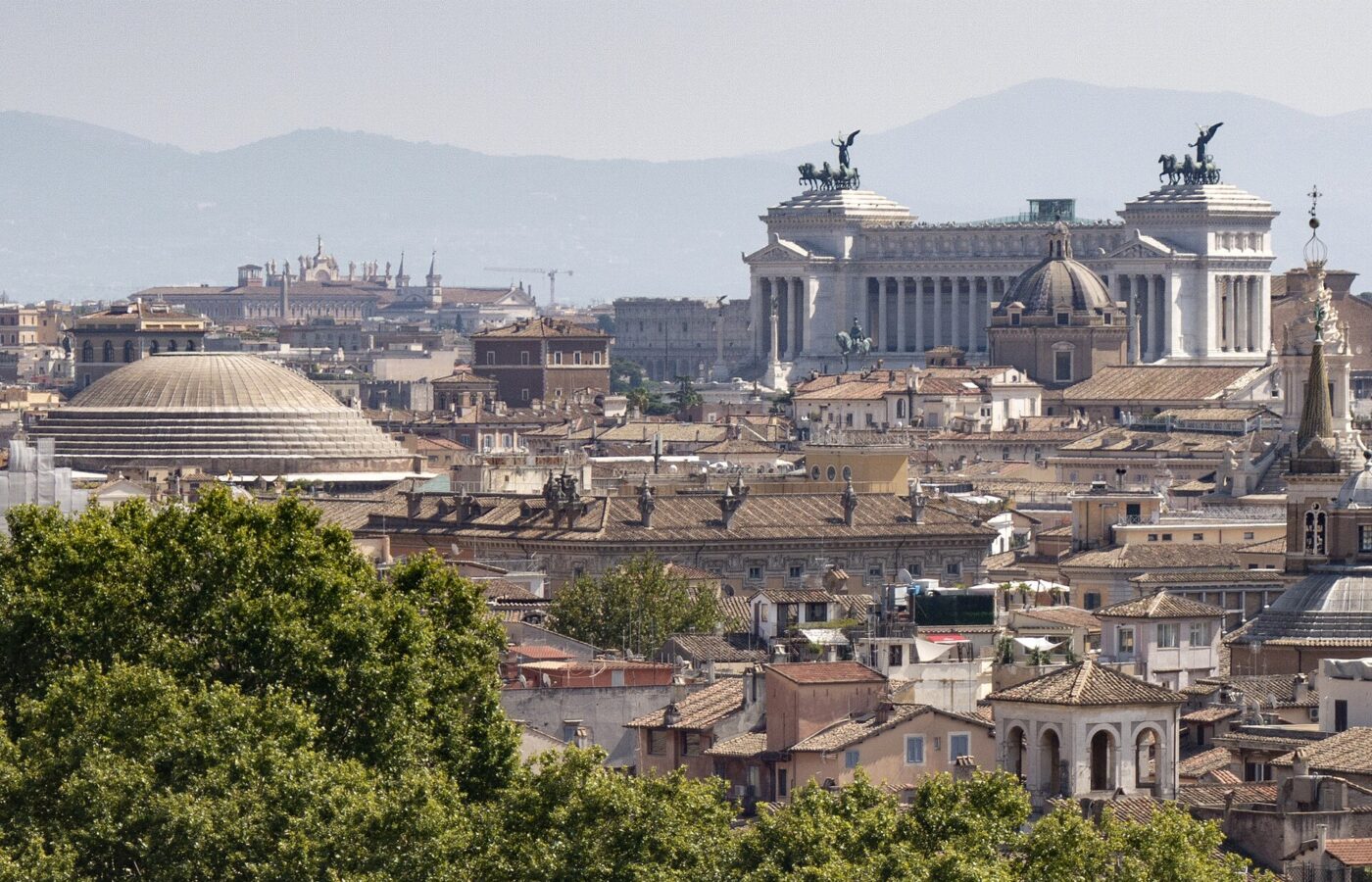
Rome is best explored on foot, one street at a time. In a few minutes you can go from an ancient forum to a baroque church, then to a small square where people eat outdoors. The city is dense, lively and sometimes noisy. That is a big part of its charm.
You’ll come to Rome for the Colosseum, the Vatican and the fountains. You’ll go back for the neighbourhood trattorias, the lanes of Trastevere and the terraces in the evening.
The best time to visit is April to June, then September to October, when the weather is mild and the days are long. Summer can be very hot, especially in July and August. Plan three to four days for a first visit. With two days you’ll see the highlights, but without much time to linger. Book tickets for the busiest sites in advance.
Where to stay in Rome
Centro storico (Piazza Navona, Pantheon)
Best for Best for a first trip if you want to do everything on foot.
Why stay here The main sights are a few minutes’ walk away. Restaurants and terraces are everywhere.
Good to know This is the most touristy area, with streets that stay busy late into the evening and higher prices.
Trastevere
Best for Ideal for couples and friends who enjoy wandering and eating outdoors.
Why stay here Cobbled lanes, colourful facades and plenty of trattorias. The village-like atmosphere suits evenings out.
Good to know The area is noisy at weekends, and rooms facing the street can be hard to sleep in.
Monti
Best for For those who want a central area with a real neighbourhood feel.
Why stay here You’re close to the Colosseum and the Forum, with small shops and cafés. The streets are pleasant to explore.
Good to know There are a lot of steep climbs and descents, and the choice of hotels is smaller than elsewhere.
Termini and Esquilino
Best for For tighter budgets and travellers arriving or leaving by train.
Why stay here The station is the city’s main transport hub, with the airport and metro within easy reach. There are many hotels, often more affordable.
Good to know The area around the station is unappealing in the evening. Keep an eye on your belongings.
Prati
Best for For those who want to visit the Vatican and sleep in a quiet area.
Why stay here A residential neighbourhood close to St. Peter’s and Castel Sant’Angelo. The streets are wide and there are plenty of shops.
Good to know It’s a bit far from the Colosseum, and the evening atmosphere is quieter.
Where to eat in Rome
Local dishes to try
- Carbonara : Pasta with eggs, pecorino and guanciale (cured pork cheek). The Roman recipe uses no cream.
- Cacio e pepe : Pasta with pecorino romano and black pepper. Simple, creamy and very punchy.
- Amatriciana : A tomato sauce with guanciale and pecorino, served with pasta such as bucatini.
- Supplì : A fried rice croquette with tomato and a centre of stringy mozzarella. Perfect as a snack.
- Carciofi alla romana : Artichokes braised with mint and garlic, best tried in spring when they are in full season.
- Pizza romana : A thin, crispy base, quite different from Neapolitan pizza. You’ll also find it sold by the slice.
Where to eat, by neighbourhood
| Place | Neighbourhood | Cuisine | In short |
|---|---|---|---|
| Cencio la Parolaccia | Trastevere | Italian cuisine | A trattoria in Trastevere for classic Italian cooking. |
| Pizzeria ai Marmi | Trastevere | Pizza | A pizzeria in Trastevere for a simple, no-frills meal. |
| Trattoria Da Lucia | Trastevere | Italian cuisine | A small trattoria in Trastevere for a dinner that captures the spirit of the neighbourhood. |
| Da Francesco | Piazza Navona | Pasta | A spot near Piazza Navona that focuses on pasta. |
| Il Baffetto | Piazza Navona | Pizza | A pizzeria in the historic centre, near Piazza Navona, easy to fit into a day of sightseeing. |
| Grazia & Graziella | San Giovanni | Italian cuisine | A neighbourhood restaurant in San Giovanni, far from the crowds at the main sights. |
Places: © OpenStreetMap contributors.
Nightlife
Pigneto
A working-class, creative neighbourhood where Romans go out in the evening. The mood is relaxed, with pubs and local bars.
- Zazie nel metro (pub)
- Klang Roma (pub)
San Giovanni
A calmer area than the centre, popular with locals. It’s a good place for a drink after a day of sightseeing.
- Officine San Giovanni (bar)
- Avalon (pub)
Testaccio
An old neighbourhood known for its nightlife and restaurants. It has a more local feel than the tourist core.
- Lana Mixology & Rooftop bar (bar)
Monteverde
A residential neighbourhood on the hills above the city, calm and away from the crowds. The pubs mainly draw locals.
- Finn Pub (pub)
- Pandorum, Ludopub (pub)
Things to do in Rome
Colosseum, Roman Forum and Palatine Hill
The Colosseum is one of the largest amphitheatres of antiquity. The Roman Forum and the Palatine Hill, right next door, show the heart of ancient Rome.
Tip Book your tickets in advance and visit early in the morning, when it’s cooler and less crowded.
Vatican: museums, Sistine Chapel and St. Peter’s Basilica
The Vatican Museums lead to the Sistine Chapel and its Michelangelo frescoes. The neighbouring St. Peter’s Basilica is impressive for its sheer scale.
Tip Book ahead. Cover your shoulders and knees, or you may be refused entry to the basilica.
Pantheon and Piazza Navona
The Pantheon is an almost intact Roman temple, topped by a large dome with an oculus. A few minutes away, Piazza Navona brings together fountains and baroque facades.
Tip Visit Piazza Navona early in the evening, when the light is beautiful and the square quietens down.
Trevi Fountain and Spanish Steps
The Trevi Fountain is a monumental baroque backdrop squeezed into a small square. The Spanish Steps, a few streets away, offer a view over the city.
Tip Come early in the morning or late in the evening to avoid the crowds, and keep your belongings close.
Galleria Borghese
A museum set in a villa in the middle of a park, with sculptures by Bernini and works by old masters. The visit stays at a comfortable, human scale.
Tip Reserve your time slot in advance: entry is by fixed time slots and they sell out quickly.
Castel Sant’Angelo
A former mausoleum turned fortress, then museum, on the banks of the Tiber. From the top terrace, the view stretches over the city and St. Peter’s.
Tip Combine it with a Vatican visit, which is just a few minutes’ walk away.
Catacombs of St. Sebastian
A network of underground galleries where early Christians buried their dead, along the Appian Way. The visit takes you away from the central tourist trail.
Tip Bring a jacket and comfortable shoes: it’s cool underground and the ground is uneven.
Getting around
From the airport to the city centre
Fiumicino is Rome’s main airport. The direct Leonardo Express train links it to Termini station in the centre. Regional trains, buses and taxis also serve the city. If you arrive at Ciampino, shuttle buses run to the centre, including Termini station.
Around the city
The historic centre is best explored on foot, and that is often the most enjoyable way. For longer distances, the metro (lines A, B and C) is fast. Line B serves the Colosseum, and line A passes near the Vatican. Buses and trams fill in the gaps, but they are less reliable. Remember to validate your ticket on every journey. Official taxis are white.
Practical info
Safety
Rome is a city where you can walk around without worry, but pickpocketing is common on the metro, on buses and near major sights. Keep your bag closed and in front of you, and don’t leave anything in back pockets.
Good to know
- Book the Colosseum, the Vatican and the Galleria Borghese in advance, especially from March to October.
- Cover your shoulders and knees to enter churches and the Vatican.
- Fill your water bottle at the drinking fountains found all over the city.
- Be wary of people who approach you near monuments offering tours or bracelets: decline politely and keep walking.
Aziz’s take
Rome requires patience: queues, heat and crowds set the pace of the day. The most rewarding visits happen early in the morning, then in the afternoon in a quieter neighbourhood. In the evening, a trattoria in Trastevere or Monti is a good way to end the day.
FAQ
How many days do you need in Rome?
Three to four days is enough to see the main sights without rushing: the Colosseum and Forum, the Vatican, the historic centre and a neighbourhood like Trastevere. With two days you’ll see the highlights, but you’ll have to make choices. If you love museums and long walks, five days will feel comfortable.
Where should I stay in Rome for the first time?
The historic centre, around Piazza Navona and the Pantheon, is the most convenient: almost everything is walkable. Trastevere and Monti are also good choices, with more of a neighbourhood atmosphere. If your budget is tight, the area around Termini station has lower prices and good transport links.
When is the best time to visit Rome?
Spring, from April to June, and early autumn, in September and October, are the most pleasant. The weather is mild and the days are long. In July and August the heat is intense and midday sightseeing becomes tiring. Winter is quieter, with cool temperatures and sometimes rain.
Do I need to book the Colosseum and the Vatican in advance?
Yes, it’s strongly recommended. Both sites attract huge numbers of visitors, and queues on the day can be long. Booking ahead lets you choose your time slot and saves time. The Galleria Borghese also works with time slots: without a reservation, you may not be able to get in.
How do I get from Fiumicino airport to the centre of Rome?
The simplest option is the Leonardo Express train, which goes directly to Termini station. You can also take a regional train, a bus or a taxi. The best choice depends on where you’re staying: if you’re near Termini, the train is the most direct. Otherwise, plan to continue by metro or taxi.
Is Rome an expensive city?
Rome is in line with other major European cities. Accommodation takes the biggest share of the budget, especially in spring and summer. For meals, eating in neighbourhood trattorias rather than on the big squares helps keep the bill down. Many sights can be enjoyed for free from the outside, such as the fountains and the squares.