
Spain
Barcelona
Plan your Barcelona trip: best neighborhoods to stay, tapas and restaurants, bars, sights, getting around and daily budget. Practical tips before you go.
Barcelona brings together a seaside city, medieval lanes and the architecture of Gaudí. You can spend the morning at the beach, the afternoon in a museum and the evening sharing tapas on a terrace.
The city is compact, well served by the metro and easy to walk from one neighborhood to the next. Each area has its own character: the Gothic Quarter and El Born for history, the Eixample for its grand avenues, Gràcia for its village feel, and La Barceloneta for the sea.
The best time to visit is May to June, then September to October. Temperatures are mild and the crowds are manageable. In midsummer the heat is intense and the sights are packed.
Allow 3 to 4 days for a first visit. That’s enough to see the highlights without rushing and still leave time to wander.
Where to stay in Barcelona
Gothic Quarter and La Ribera (El Born)
Best for Best for those who want to do everything on foot on a first trip.
Why stay here Ancient lanes, the cathedral, museums and plenty of restaurants are just minutes away. You can walk to the beach.
Good to know The area is very busy, sometimes noisy in the evening, and rooms are often small and pricey.
L’Antiga Esquerra de l’Eixample
Best for Ideal for travelers who like calm, well-connected neighborhoods with good restaurants.
Why stay here Wide, orderly streets, a nearby metro stop and several well-regarded restaurants in the area. There are plenty of hotels.
Good to know The atmosphere is more residential and less picturesque than in the old town.
La Vila de Gràcia
Best for Perfect for couples and travelers who prefer a village atmosphere to the city center crowds.
Why stay here Lively squares, small shops and terraces give the neighborhood a local feel. It’s great for evenings out.
Good to know The historic center and the sea are farther away: expect a metro ride or a good walk.
La Barceloneta
Best for For beach lovers and fans of fresh seafood.
Why stay here The sea is right there, and the neighborhood has many tapas and seafood spots. You can walk to El Born.
Good to know It’s a tourist area, noisy in summer, and accommodation can be a bit old-fashioned.
Where to eat in Barcelona
Local dishes to try
- Pa amb tomàquet : Bread rubbed with ripe tomato and drizzled with olive oil. It comes with almost every meal.
- Fideuà : A paella-style dish made with short noodles instead of rice, cooked with fish and seafood.
- Butifarra amb mongetes : A Catalan sausage served with white beans. Simple, filling and satisfying.
- Calçots : Long grilled spring onions, dipped in a romesco sauce made with nuts and peppers. They’re mostly eaten in winter and early spring.
- Crema catalana : A custard dessert flavored with lemon or cinnamon, topped with a thin layer of caramelized sugar.
Where to eat, by neighbourhood
| Place | Neighbourhood | Cuisine | In short |
|---|---|---|---|
| Can Culleretes | Gothic Quarter | Spanish cuisine | A traditional Spanish restaurant in the heart of the old town, a short walk from the Ramblas. |
| Casa Leopoldo | El Raval | Regional cuisine | A regional cooking spot in El Raval, a good place to taste local food away from tourist-oriented menus. |
| Can Ramonet | La Barceloneta | Regional cuisine, fish and seafood | A good choice for Mediterranean fish and seafood in the neighborhood by the sea. |
| La Cova Fumada | La Barceloneta | Tapas | A tapas bar in La Barceloneta, ideal for a simple, no-fuss lunch. |
| Gresca | L’Antiga Esquerra de l’Eixample | Tapas | Tapas in the Eixample, for a more relaxed evening than in the city center. |
| Bar del Pi | Santa Maria del Pi | Spanish cuisine, tapas | A tapas bar on a small square in the old town, perfect for a break between sights. |
Places: © OpenStreetMap contributors.
Nightlife
Gothic Quarter, Plaça Reial and El Raval
The heart of the nightlife scene, with lively squares, narrow lanes and bars of every kind. The mood is energetic and mixed. Keep an eye on your belongings.
- Cassette Bar (Plaça Reial)
- 4Gats (Santa Anna)
- Kino (El Raval)
El Born and Santa Caterina
A great area for a drink on a terrace after visiting the museums. The lanes are lively without being overwhelming.
- Creps al Born (la Ribera)
- #Bubita (la Ribera)
- Bar del Pla (Santa Caterina)
- La Terraza del Central (Santa Caterina)
La Vila de Gràcia
The atmosphere is more local, centered on squares where friends gather for a drink. It suits relaxed nights out.
- El Rabipelao (la Vila de Gràcia)
La Barceloneta and Poblenou
Two neighborhoods close to the sea, good for a beer after the beach or away from the center.
- BlackLab Brewhouse & Kitchen (la Barceloneta)
- Garage Beer Co. Poblenou (el Poblenou)
Things to do in Barcelona
Sagrada Família
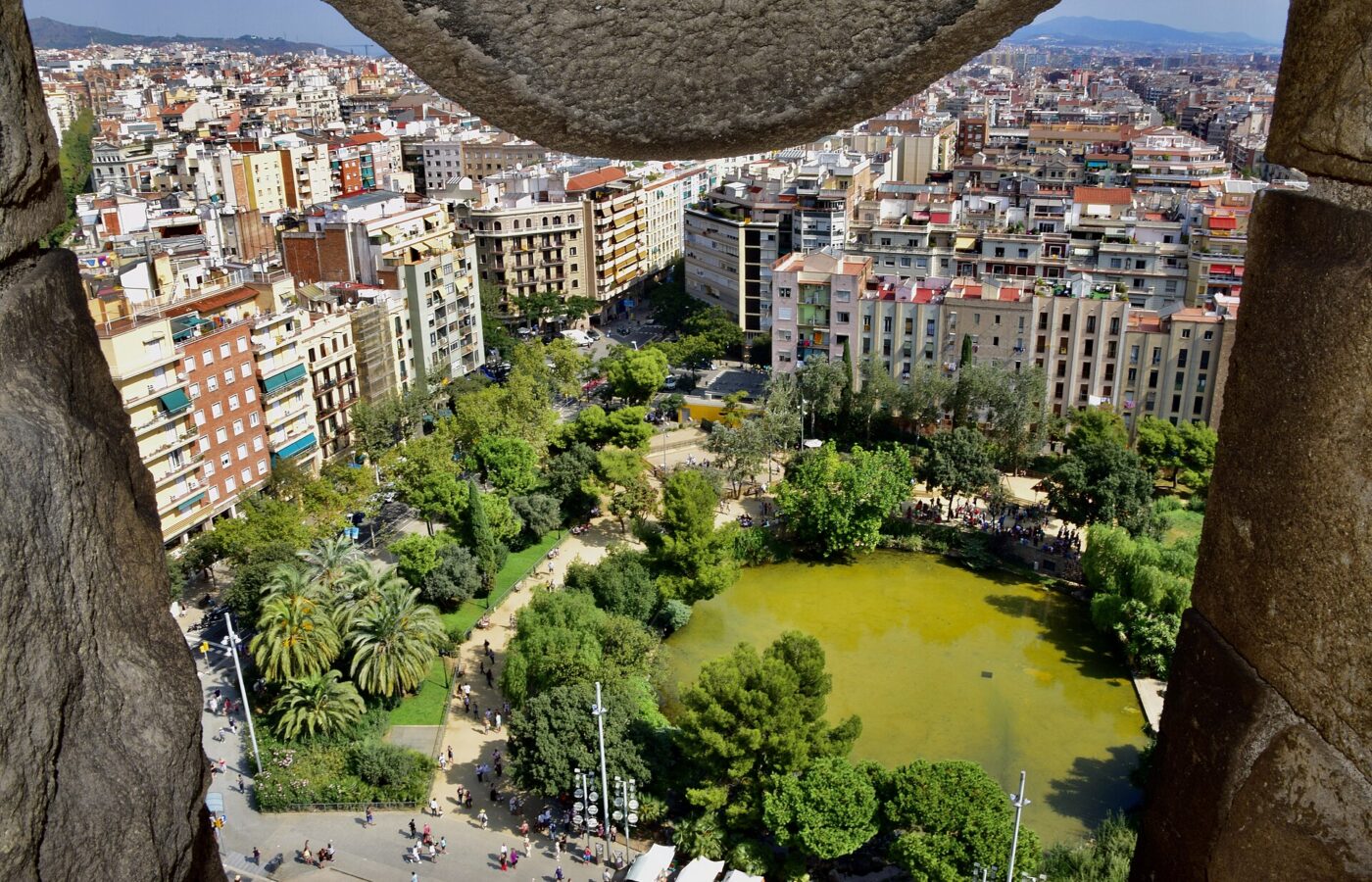
Gaudí’s basilica, still under construction, is the city’s most famous monument. The interior, bathed in colored light, is well worth the visit.
Tip Book your ticket in advance, as time slots are limited in high season.
Park Güell
This park designed by Gaudí features colorful mosaics and a fine view over the city. Part of the site charges an entry fee.
Tip Book ahead and arrive early to avoid the crowds and the heat.
Gothic Quarter and Cathedral
A maze of medieval lanes, squares and old façades around the cathedral. Museums such as the Museu Frederic Marès and the Museu d’Història de Barcelona are nearby.
Tip Stroll early in the morning or late in the day, when it’s quieter.
Palau de la Música Catalana
This modernist concert hall in the Sant Pere district is famous for its richly decorated interior. You can visit it or catch a concert there.
Tip Book your visit or your seat in advance.
El Born and Its Museums
La Ribera neighborhood brings together the El Born Cultural Centre, the Museu de Cultures del Món and plenty of boutiques. The Citadel Park is right next door.
Tip Combine your visit with a break in the Citadel Park.
Montjuïc and the Museu Nacional d’Art de Catalunya
The Montjuïc hill offers gardens, viewpoints and Catalonia’s major art museum. The Mies van der Rohe Pavilion sits at the foot of the hill.
Tip Plan half a day and wear comfortable shoes, as the site is large and hilly.
Barceloneta Beach
The beach closest to the center is easy to reach and very lively in summer. The neighborhood’s seafood restaurants are just steps away.
Tip Come in the morning or late afternoon to avoid the crowds.
Getting around
From the airport to the city centre
Barcelona-El Prat airport connects to the center in several ways. The Aerobús goes directly to Plaça de Catalunya. The metro serves the terminals, and a commuter train links Terminal 2 to several central stations. A taxi is also a simple option if you’re traveling in a group or arriving late.
Around the city
The center is very walkable. For longer distances, the metro is the most practical option, as it serves most sights and neighborhoods. Buses fill the gaps, especially in less-connected areas. Multi-trip travel cards cut the cost of journeys if you’re staying several days.
Practical info
Safety
Barcelona generally feels safe, but pickpocketing is common. Stay alert on the Ramblas, in the metro, near tourist sites and on Barceloneta beach.
Good to know
- Keep your bag closed and in front of you, and never leave your phone on a café table.
- Spaniards eat late: lunch is taken around midday and dinner late in the evening. Many restaurants close between the two services.
- Book major sights such as the Sagrada Família or Park Güell in advance, especially in spring and summer.
- In summer, bring water, a hat and plan shaded breaks for outdoor visits.
Aziz’s take
For a first trip, keep one day free with no plans so you can simply wander. Gràcia and La Barceloneta have a more local rhythm than the center, and their terraces are perfect for a relaxed end to the day.
FAQ
How many days do you need in Barcelona?
Three to four days is enough for a first visit. That leaves time for the Sagrada Família, Park Güell, the Gothic Quarter and El Born, plus a beach day or a stroll on Montjuïc. With a two-day weekend, focus on the center and one or two of Gaudí’s sites.
Where should I stay in Barcelona for the first time?
The Gothic Quarter and El Born are convenient for doing everything on foot, but they’re lively and noisy in the evening. The Eixample is calmer and well connected by metro. Gràcia suits anyone who prefers a village atmosphere. La Barceloneta is the choice if the beach matters most.
When is the best time to visit Barcelona?
May, June, September and October are the best months. Temperatures are pleasant for walking, and the sights are a little less crowded than in midsummer. In July and August it’s hot and the city is very busy. Winter is mild, but the days are shorter.
How do I get from Barcelona airport to the city center?
You have three main options: the Aerobús, which goes to Plaça de Catalunya, the metro with a change to reach the center, or the commuter train from Terminal 2. A taxi is convenient if you’re traveling in a group or arriving late at night.
Do I need to book the Sagrada Família in advance?
Yes, it’s strongly recommended. Tickets are for fixed time slots, and they sell out fast, especially in spring and summer. Book as soon as your dates are set, and ideally choose an early morning or late afternoon slot to avoid the crowds.